


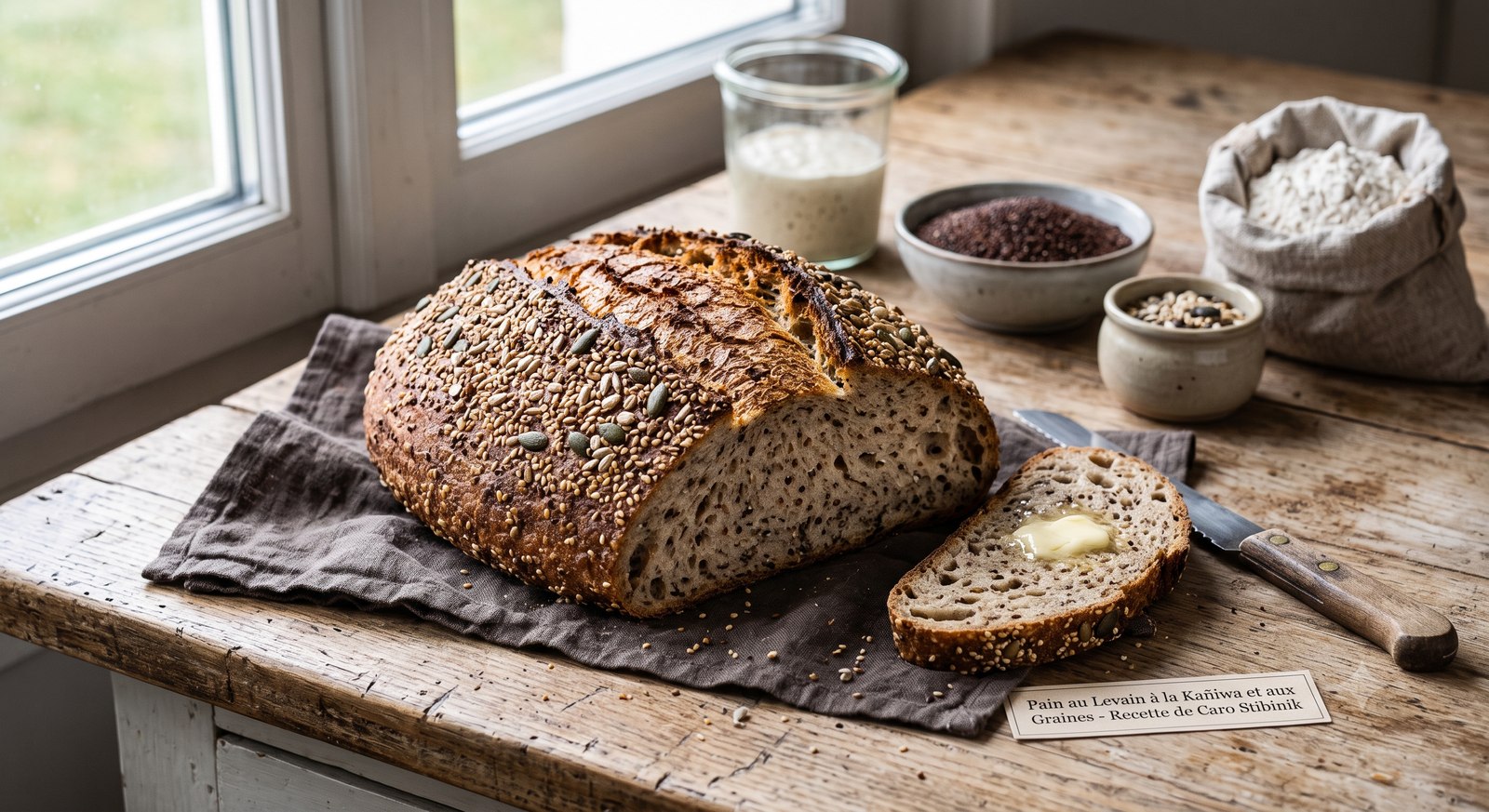
- Servings1 loaf
- Prep30 min
- Resting4 h
- Cooking50 min
- DifficultyMedium
A true sourdough loaf, but gluten-free: the structure comes not from wheat but from psyllium, which forms a binding gel, while buckwheat brings the rustic sourdough flavour. Kañiwa, quinoa’s little Andean sister, enriches the crumb with protein, and cassava starch, an Amazonian root, lightens it. The long sourdough fermentation makes the bread more digestible and builds aromas no fast yeast can match.
Ingredients
- 100 g active gluten-free sourdough starter (buckwheat or rice)
- 200 g buckwheat flour
- 100 g wholegrain rice flour
- 80 g cassava (tapioca) starch
- 50 g kañiwa flour
- 15 g psyllium husk
- 380 ml warm water
- 9 g salt
- 60 g mixed seeds (sunflower, pumpkin, flax)
Preparation
Mix the psyllium with the warm water and rest for 10 minutes: it forms a thick gel that takes over the role of gluten.
In a large bowl, combine the buckwheat, rice flour, cassava starch, kañiwa flour and salt. Add the starter and the psyllium gel.
Mix to a supple, even dough — no long kneading needed, there is no gluten to develop. Fold in the seeds.
Shape into a ball with wet hands, place it in a floured banneton (rice flour), cover and let rise for 3 to 4 hours at room temperature, until visibly risen.
Preheat the oven to 240 °C with a lidded pot inside. Tip the dough into the hot pot, score a cross on top, cover and bake for 30 minutes. Remove the lid and bake for 20 more minutes until the crust is deep golden.
Cool completely on a rack, at least 2 hours, before slicing: a gluten-free loaf must be cold for its crumb to set and not turn gummy.