


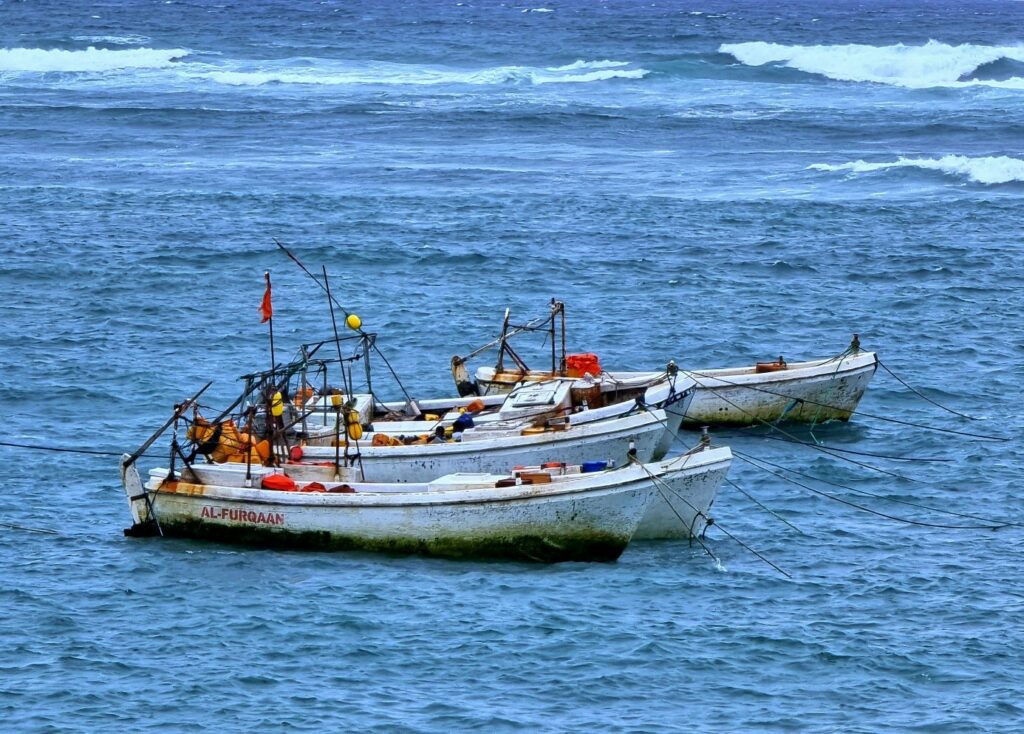
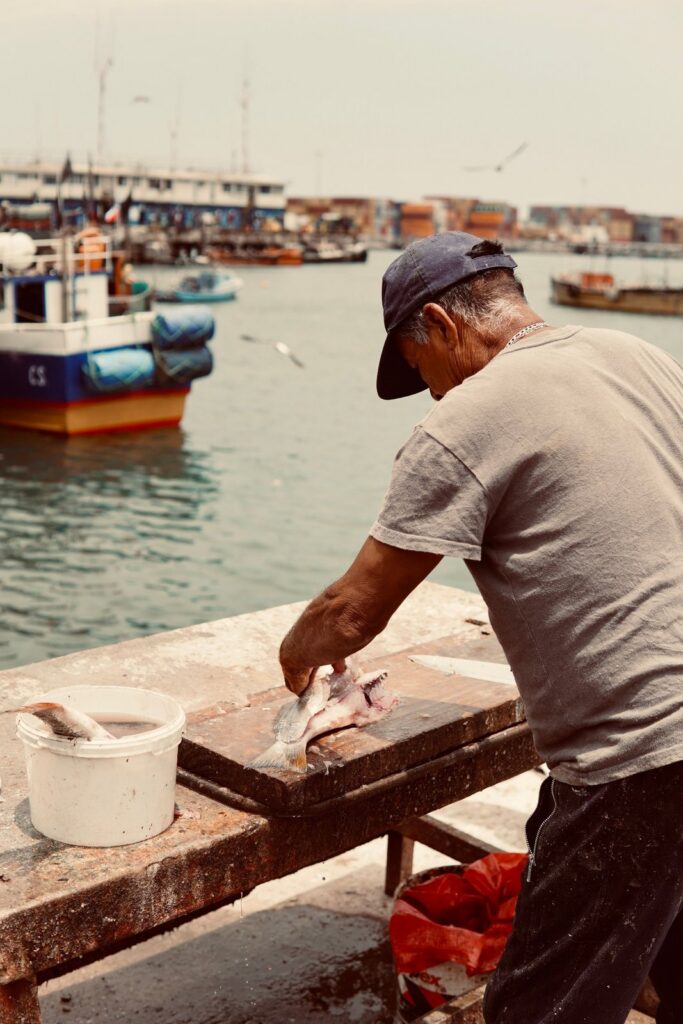
Thanks to the richness of our coastline, we have “Le Ceviche”, “from the ocean to the plate”.
One of the most emblematic dishes of Peruvian gastronomy is without doubt ceviche.
In ancient Peru, limes as we know them today did not yet exist. To bring acidity to the fish, people used, among other things, a vinegar made from Peruvian mangoes.
With the arrival of the Spanish, culinary habits changed and the lime gradually made its appearance, replacing the acidic preparations made from fruit.
Thanks to its immense coastline and the extraordinary richness of its waters, Peru offers a wide variety of fish for making ceviche. The choice of fish is essential: the flesh must be fresh and firm enough not to fall apart when the lime juice is added and the ingredients are mixed.
There are many kinds of ceviche today: fish ceviche, seafood ceviche or mixed ceviche. And vegetarians are not forgotten! Delicious ceviches can also be made with Andean beans or mushrooms.
A ceviche is always a good idea! In Peru it is traditionally eaten at lunchtime, but when you are sharing dinner with friends, why not enjoy it in the evening too?

Fresh, tangy, generous and full of character, ceviche is far more than a dish: it is a true symbol of Peruvian cooking.
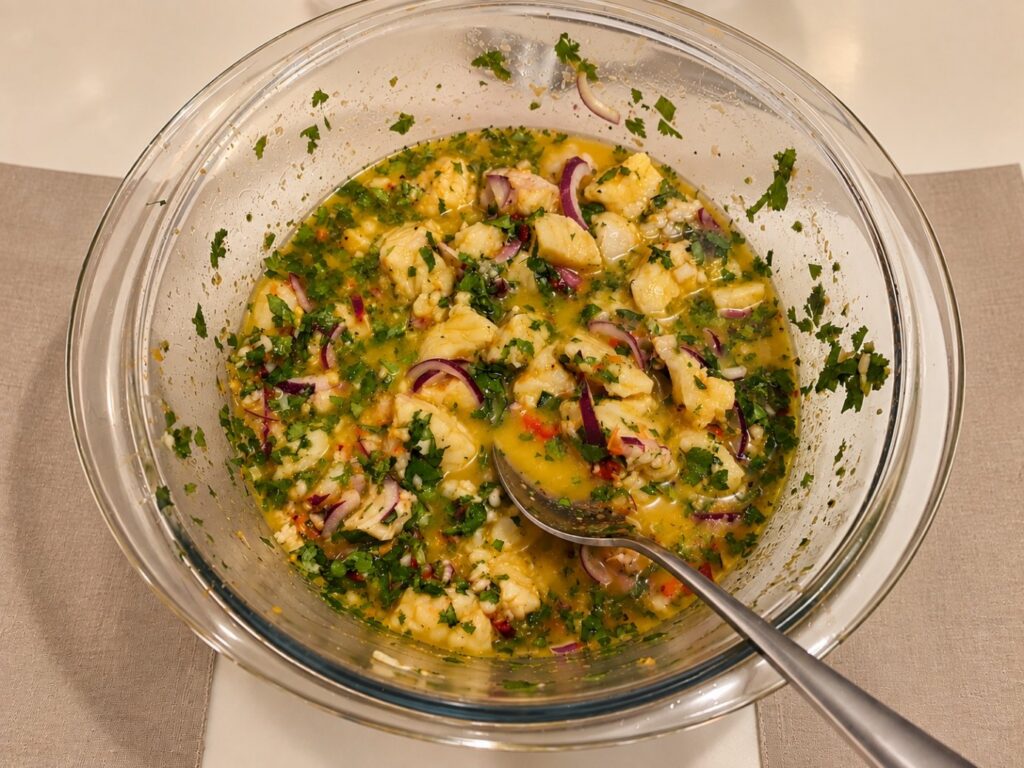
Ceviche al ají amarillo
Here is one of my versions of ceviche…
Ingredients
- 300 g cod fillet
- 15 limes
- 30 g fresh coriander, finely chopped
- 20 g organic ginger, grated
- 5 g ají limo chilli, finely diced
- 2 garlic cloves
- 50 g fresh ají amarillo flesh, deseeded and stripped of its inner membranes, finely chopped or puréed
- 1 large red onion, finely sliced
- 1 pinch of sea salt
- 1 pinch of black pepper
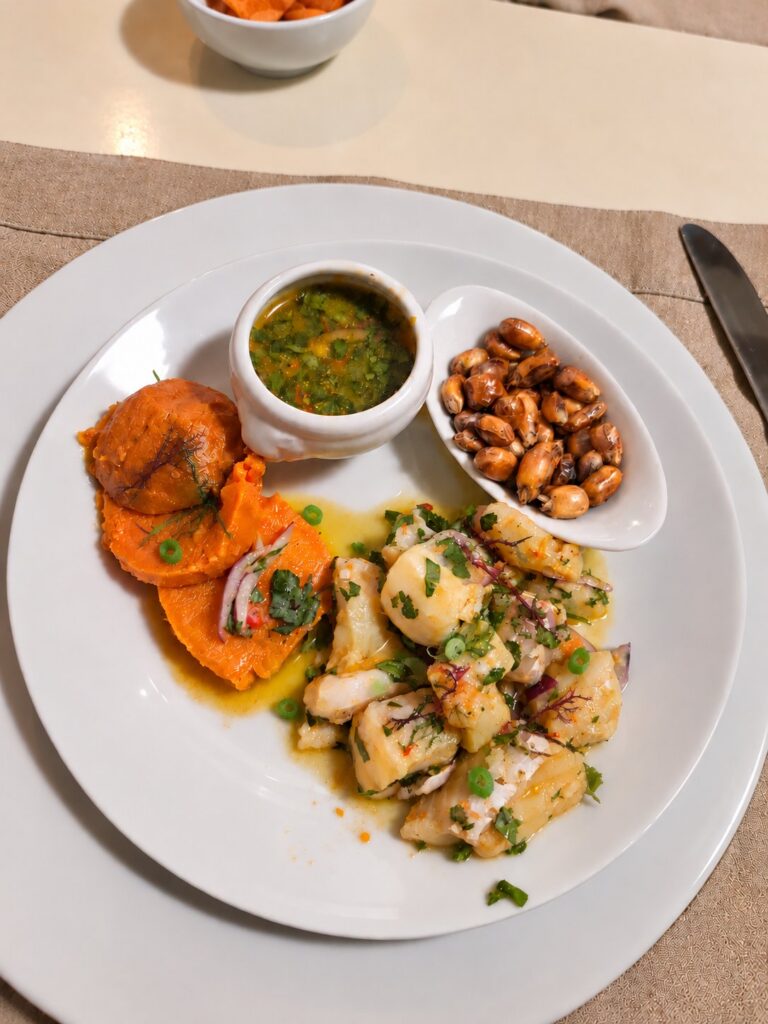
To serve alongside
Sweet potato, lettuce leaves, Peruvian toasted corn (cancha) and fresh seaweed.
Method
- Two days before making the ceviche, once the skin and bones have been removed from the fish, put it in the freezer to prevent the risk linked to the Anisakis parasite.
- Take the fish out of the freezer about two hours before making the ceviche and let it thaw.
- Once partly thawed, cut the fillet into cubes of about 1 cm. Put them in a container and keep in the fridge.
- Slice the red onion very finely into julienne strips and set aside.
- Grate the ginger and chop or crush the garlic. Remove the seeds and inner membranes from the ají amarillo, then finely chop its flesh or purée it. Also chop the ají limo and finely shred the coriander. Set aside.
- Once all the ingredients are ready, place the fish cubes in a bowl, preferably glass. Add the salt and the garlic, then mix gently.
- Next add the ají limo, the ginger, the ají amarillo and the black pepper.
- Squeeze the limes and strain the juice before pouring it over the fish. Mix gently and taste. Adjust the seasoning by adding a little salt if needed. Depending on your taste and your tolerance for heat, add more ají amarillo or ají limo.
- To finish, add the sliced red onion and mix one last time before serving the ceviche on plates.
- Serve with a few slices of sweet potato, lettuce leaves, Peruvian toasted corn (cancha) and, if you are lucky enough to live near the sea, some fresh seaweed.
Enjoy your meal!
Leave a Reply